Many people feel confused or even worried after noticing gaps between their teeth following a deep cleaning appointment. You go in expecting cleaner teeth and healthier gums, but afterward, your smile may suddenly look different in the mirror. Spaces that were never visible before can appear larger, darker, or more noticeable near the gumline.
If this has happened to you, there’s no need to panic. In most cases, deep cleaning does not damage your teeth or create new gaps. Instead, the procedure reveals underlying changes caused by gum disease, tartar buildup, and inflammation that may have been hidden for years. Understanding the real reason behind these gaps in teeth after deep cleaning can help you feel more confident about your oral health and healing process.
What Is a Deep Cleaning?
A deep cleaning, also called scaling and root planing, is a treatment used to manage gum disease. Unlike a regular cleaning that focuses on the visible surfaces of the teeth, deep cleaning targets plaque and hardened tartar below the gumline. The goal is to remove bacteria, reduce inflammation, and help the gums heal properly around the teeth. Research shows that after the teeth are cleaned and polished, the tooth surfaces become smoother, making it harder for bacteria to stick to them.
Dentists typically recommend deep cleaning for patients with:
- Bleeding gums
- Persistent bad breath
- Gum recession
- Deep periodontal pockets
- Moderate or advanced gum disease
This treatment plays an important role in preventing further bone loss and reducing the risk of tooth loss. Although it may slightly change the appearance of your gums or teeth, the purpose is to improve the long-term health of your smile.
Why Do Gaps Become Visible After Deep Cleaning?
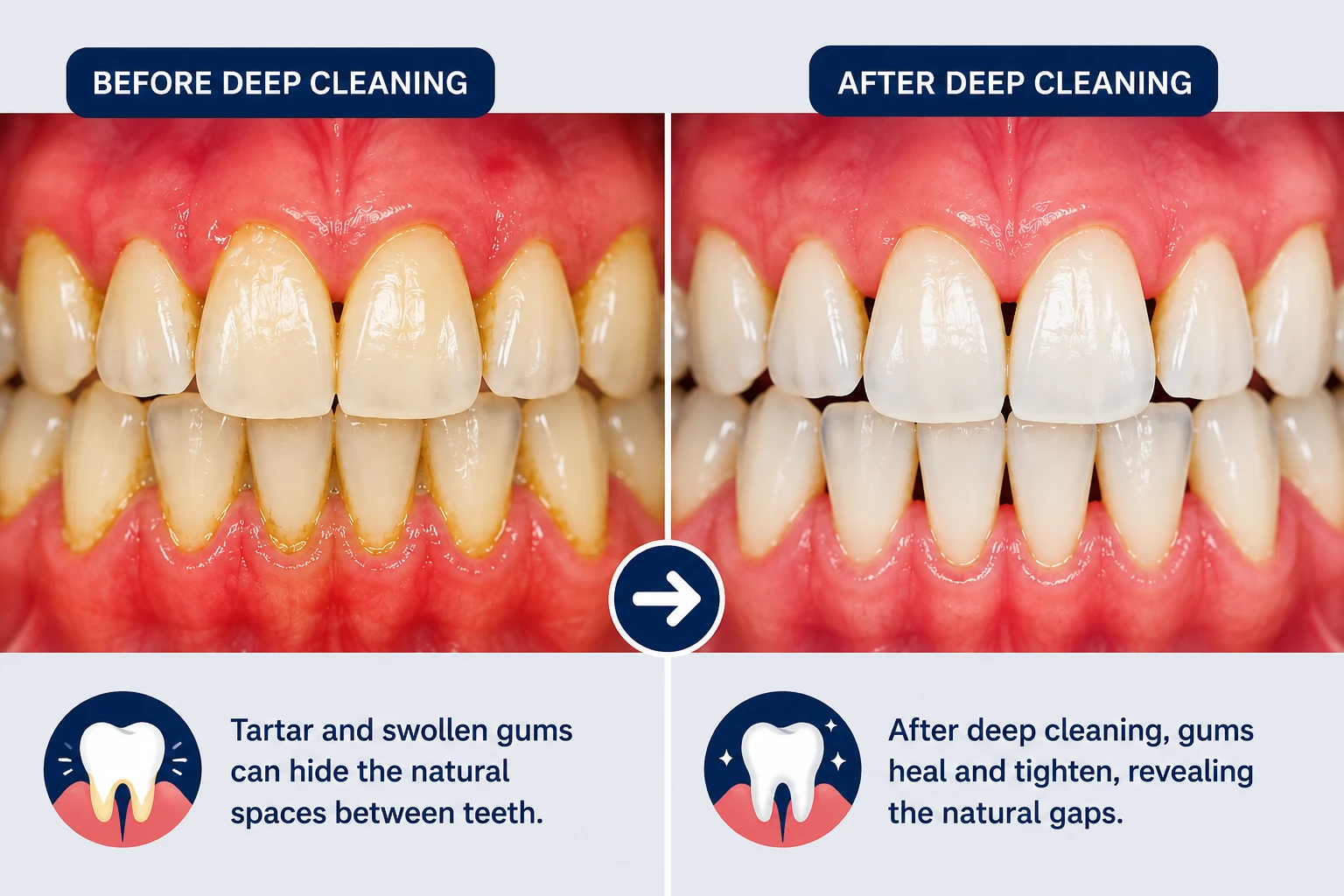
One of the biggest misunderstandings about deep cleaning is the belief that the treatment itself creates gaps. In reality, the spaces often existed before the procedure but were hidden by tartar buildup or swollen gum tissue.
When the gums heal and inflammation decreases, your teeth and gumline begin to return to a healthier condition. This process can expose spaces that were previously covered by infection, plaque, or enlarged gums. What you are seeing is often the natural shape of your teeth and gums after harmful buildup has been removed.
Tartar Buildup Was Filling the Gaps
Heavy tartar buildup is one of the most common reasons teeth appear closer together before deep cleaning. Over time, plaque hardens into tartar and collects around the teeth and gums. In severe cases, this buildup becomes thick enough to occupy the spaces between teeth.
Once the tartar is removed during scaling, those hidden spaces become visible. Patients are often surprised because they mistake the tartar for part of their natural tooth structure. The cleaning did not create the gaps in teeth after deep cleaning —it simply removed the material that was hiding them.
This is especially common in patients who have delayed dental visits for several years or have struggled with periodontal disease.
Swollen Gums Begin to Shrink
Inflamed gums can significantly change the appearance of your smile. When bacteria irritate the gum tissue, the gums become swollen, puffy, and enlarged. These swollen tissues may temporarily fill small spaces between teeth.
After a deep cleaning, inflammation begins to decrease. As your gums heal, they tighten and reattach more closely around the teeth. Once the gums become firmer and healthier, the gaps in teeth after deep cleaning that may appear will gradually diminish, resulting in a healthier gumline and smile. As This healing process often reveals small triangular spaces near the gumline, commonly referred to as “black triangles.”
Although these gaps after deep cleaning may seem alarming at first, they are usually signs that the gum tissue is recovering from infection and inflammation.

Gum Recession From Periodontal Disease
In some cases, visible gaps in teeth after deep cleaning are related to gum recession caused by periodontal disease. Gum disease does more than irritate the gums—it can gradually damage the supporting tissues and bone around the teeth.
As the gums pull away from the teeth, the roots may become exposed, and the spaces between teeth may appear larger. Unfortunately, lost gum tissue does not always grow back naturally. This is why treating gum disease early is so important.
Deep cleaning helps stop the progression of gum disease, but it may also reveal the extent of existing recession that was previously hidden beneath swollen tissue and tartar deposits.
Bone Loss Can Affect Tooth Position
Advanced periodontal disease can also lead to bone loss around the teeth. The jawbone provides support and stability, so when bone loss occurs, teeth may begin to shift slightly over time.
As teeth move, spaces between them can become more noticeable. Some patients discover that their teeth appear longer, looser, or farther apart after deep cleaning because the supporting structures underneath have already changed.
The cleaning procedure itself does not move the teeth. Instead, it exposes the true condition of the gums and bone after removing years of bacterial buildup.
Are These Gaps Permanent?
This is one of the most common questions patients ask after deep cleaning. The answer depends on the cause and severity of the spacing.
For some people, the spaces after deep cleaning become less noticeable as the gums continue healing over several weeks. Mild inflammation may continue improving after treatment, allowing the gum tissue to adapt and tighten naturally around the teeth.
However, if gum recession or bone loss is advanced, some gaps in teeth after deep cleaning may remain visible long term. Even though this can affect appearance, it’s important to remember that healthier gums are far more beneficial than infected gums hiding disease underneath.
Your dentist Lilburn can monitor the healing process and recommend treatment options if cosmetic concerns remain.
Common Symptoms Patients Notice
In addition to visible gaps in teeth after deep cleaning, many patients experience other changes. Most of these are temporary and part of the normal healing process.
Common symptoms include:
- Mild tooth sensitivity
- Gum tenderness
- Slight bleeding during brushing
- Teeth feeling “larger” or cleaner
- Increased awareness of spaces between teeth
These symptoms usually improve within a few days or weeks. Maintaining proper oral hygiene during healing is essential for the best results.
How Dental Specialist Fix Gaps After Deep Cleaning

If the spaces between teeth remain noticeable after healing, there are several cosmetic and restorative treatments available. The right option depends on the condition of your gums, teeth, and supporting bone.
Dental Bonding for Small Spaces
Dental bonding is one of the fastest and most affordable ways to improve small gaps or black triangles. During the procedure, a tooth-colored resin is carefully applied and shaped to close the spaces between teeth.
Bonding is popular because it:
- Requires minimal tooth preparation
- Looks natural
- Can often be completed in one visit
- Improves smile symmetry
This treatment works especially well for mild cosmetic concerns after gum healing is complete.
Orthodontic Treatment for Tooth Movement
If teeth have shifted due to bone loss or gum disease, orthodontic treatment may help close the spaces. Clear aligners and braces can gradually move teeth into better alignment and improve gaps between teeth.
Many adults choose clear aligners because they are discreet and removable. Orthodontic treatment may also improve bite function and make teeth easier to clean.
However, gum health must be stable before moving teeth orthodontically. Your dentist may recommend periodontal treatment first to ensure the gums are healthy enough for orthodontics.
Veneers for Cosmetic Smile Improvement
Porcelain veneers are another popular option for patients wanting a more dramatic smile transformation. Veneers cover the front surfaces of the teeth and can improve spacing, shape, and overall appearance.
They are often recommended for:
- Larger gaps
- Uneven teeth
- Black triangles
- Cosmetic smile enhancement
Because veneers are custom-designed, they provide highly natural-looking results.
Gum Grafting for Severe Recession
When gum recession is advanced, gum grafting may be recommended to restore lost tissue around the teeth. This procedure involves placing healthy tissue in areas where the gums have receded.
Gum grafting can:
- Reduce root exposure
- Improve appearance
- Protect sensitive teeth
- Support long-term gum health
Not every patient requires this treatment, but it can be highly effective in severe cases.
Can You Prevent Gaps After Deep Cleaning?
The best way to minimize visible spacing is to prevent gum disease from progressing in the first place. Healthy gums provide strong support around the teeth and reduce the risk of recession.
Helpful prevention habits include:
- Brushing twice daily
- Flossing every day
- Scheduling regular dental cleanings
- Avoiding tobacco products
- Using a soft-bristled toothbrush
- Treating gum disease early
Consistent preventive care helps protect both your oral health and smile appearance over time.
Emotional Impact of Smile Changes
Changes in your smile can affect more than just your appearance. Many people feel embarrassed or anxious after noticing new spaces between their teeth. It’s completely normal to feel self-conscious, especially if the gaps in teeth after deep cleaning seem noticeable while talking or smiling.
The important thing to remember is that deep cleaning is improving your oral health—not damaging it. Removing infection and inflammation protects your teeth from more serious problems in the future.
If cosmetic concerns continue bothering you, discussing treatment options with your dentist can help restore your confidence.
When Should You Contact Your Dental Practitioner?
While mild spacing and sensitivity are normal during healing, certain symptoms should be evaluated promptly.
Contact your dentist if you experience:
- Severe pain
- Persistent bleeding
- Loose teeth
- Swelling that worsens
- Signs of infection
- Rapidly increasing gaps
Regular follow-up visits allow your dentist to monitor healing and ensure your gums remain healthy.
Final Thoughts
Gaps in teeth after deep cleaning may feel surprising, but they are usually signs that inflammation and tartar buildup have been successfully removed. The spaces are often caused by pre-existing gum disease, swollen gums, tartar deposits, or bone loss—not by the cleaning procedure itself.
Although some gaps improve naturally as the gums heal, cosmetic treatments like bonding, veneers, orthodontics, or gum grafting may help enhance your smile if needed. Most importantly, deep cleaning protects your oral health and helps prevent more serious periodontal problems in the future.
Healthy gums are the foundation of a healthy smile. By maintaining good oral hygiene and visiting your dentist regularly, you can protect your teeth, gums, and confidence for years to come.